Disney ParksNewsThe Walt Disney Company
Disney Parks Face Growing Ableism Accusations as Guests Share Stories of Troubling Experiences


A few years ago, Disney made a big deal about adding a fifth key to its legendary Four Keys philosophy. The new key was Inclusion, and it felt like a genuine statement of intent from a company that has spent decades telling guests that its parks are for everyone.
Disabled guests are now asking Disney to explain what that key actually means in practice, because right now, a lot of them say it does not match their experience on the ground.
The DAS Problem at Disney Parks
For guests who cannot physically or cognitively manage a standard queue environment, the Disability Access Service has historically been the bridge between wanting to be at Disney and actually being able to enjoy it. Recent changes to the qualification process have made that bridge a lot harder to cross, and the community is feeling it.
One Annual Passholder shared her experience after seven straight years of qualifying for DAS. This was the first trip where she did not make it through the new process, and what she described was not just disappointing. It was demoralizing. She spoke with four different representatives and felt judged on her appearance from the moment each call began. She presents as visibly nondisabled, and she believes that the visual first impression drove the outcome of every conversation before she had a chance to explain what she actually needed.

She was talked down to, given scripted answers that did not address her specific situation, and told she could not submit medical documentation because Disney lacked a qualified medical professional to review it. At the same time, she was transferred to speak with someone in a medical capacity during the same call. She called the new system ableist and said it felt nothing like what the ADA requires. She ended her trip in tears more than once.
Her story is not unique. The comment sections across Disney fan communities are full of similar accounts, and alongside those accounts is a troubling undercurrent of rhetoric from other guests questioning whether people are disabled enough, whether invisible disabilities count, or whether severely disabled guests should visit theme parks at all. That kind of talk is happening in communities centered around a park that just added Inclusion to its core values.
The ECV Judgment Problem at Disney Parks
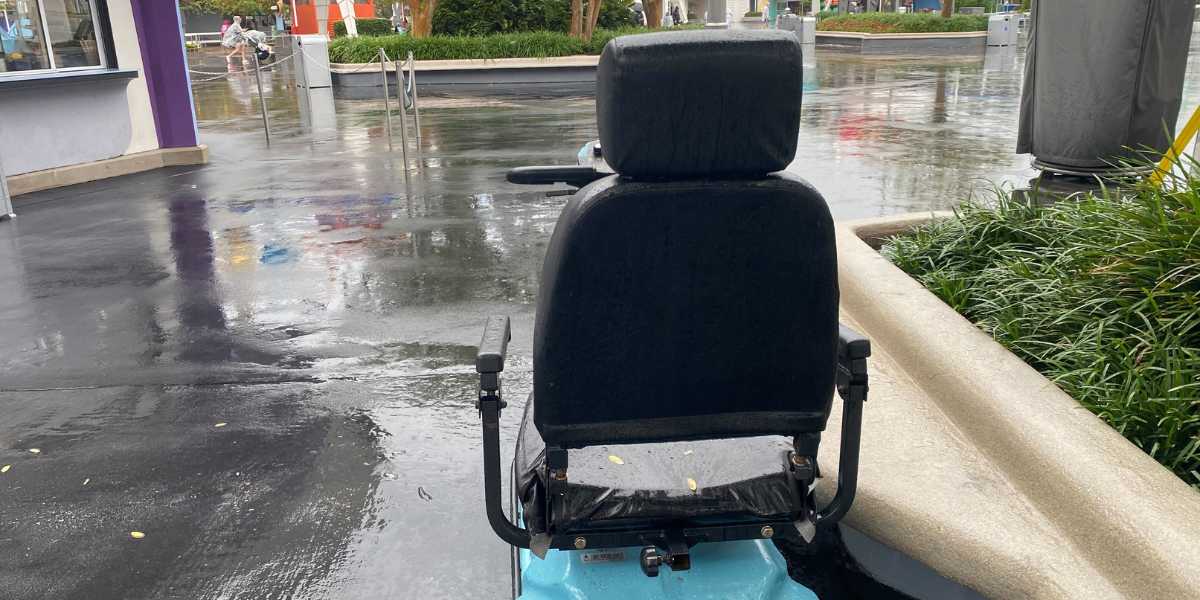
On an Annual Passholder Facebook page, a post about ECV use at the parks sparked a conversation that laid bare how much judgment mobility aid users face from fellow guests. The post made a simple point. Disney World can mean ten or more miles of walking in a single day. ECVs exist so people can participate without destroying themselves in the process. You do not need to look disabled to need one.
ECV users responding to the post described being stared at, questioned silently and openly, and made to feel guilty for using a tool that exists specifically to help them. One user noted she waits through multiple bus cycles at the end of every park day just to get home. Another pointed out that many people downplay their need for mobility aids because society makes disabled people feel like a burden, which then gets misread as proof they did not need the aid at all.
A Cast Member Who Mocked a Disabled Guest
At Disneyland, a guest who uses a cane shared a Threads post about a cast member at Indiana Jones Adventure who refused her request for the accessible queue, told her repeatedly she would be fine on the standard route, and then mocked her publicly when she exited the ride and asked for his name to file a complaint. He laughed at her. She cried. And then she went straight to Guest Services.
View on Threads
Her post ended with something worth sitting with. Everyone will be disabled eventually, whether from age or injury, and she hoped the cast member in question would learn empathy before that day comes for him.
Disney’s fifth key is Inclusion. These stories are a direct challenge to it.




I’ve been an annual passholder a number of years, and I won’t go back now. It was difficult WITH DAS. Without it, there is just no point. There is no way I could wait in a 45 minute to 2 hour queue. And with my chair, I know if I have to rush off to a restroom, it would be impossible to get back out of the line.
It’s sad, there are already so many things I cant do. I can’t enjoy the beach, I can’t go on hikes, etc. Now I can’t do Disney, either. Really sucks.
Disabled people also abused the system by selling themselves as “guides” to jump the line. This system has been abused so much that it is now broken.
The last time I took my adult daughter to Disneyworld we applied for a pass and it was denied. My daughter has seizures that are brought on from being anxious, extreme stress, space issues, crowds, etc. We usually time our visit to less crowded times and use the disability pass for the longest lines, which have become impossible for her to be in. Luckily, my daughter has warning signs before a seizure comes on, so we were told there were quieter areas in the parks. We stopped at the information at the beginning of the park and ask for a map of those areas. The women helping us indicated in not such a sympathetic way that there are not quiet areas in the park and asked me why I would even bring her there! We have been going to Disney almost every year since our children were born. We haven’t been back since this happened. It is already so hard when you have a disability that people can’t see. My daughter struggles with people not believing her daily. Disney is the last place I would have expected judgement.
I’ve been to Disney many times over the years. My last trip in 09′ was at Christmas. The busiest time of the year. I had to use a ECV didn’t want to, tried without for 1/2 day and it almost did me in. I’m bone on bone with both knees. You can’t see it , I don’t look like there are mobility issues but it’s there. It’s really sad Disney has had to do something. Because there are people out there who absolutely take advantage and it’s those people who have ruined it for those who do.