

Disney ParksNews
The Myth of the ‘Local Problem’:The Truth Behind Disney World’s 2026 Transit Crisis

A single operational update can send the entire Walt Disney World community into an absolute tailspin. In mid-June 2026, corporate leadership did exactly that, officially confirming a massive, permanent shift in how guests navigate the property.

Starting Sunday, June 28, 2026, Disney is permanently shutting down a legendary transportation loophole. Any guest attempting to board a Walt Disney World Resort hotel bus or the Sassagoula River Cruise water taxi departing directly from Disney Springs will face a strict verification checkpoint. Before entering the boarding queues, guests must present digital proof of a confirmed resort hotel stay, a resort dining reservation, or an active experience booking. No reservation, no ride.
On paper, the corporate logic seems ironclad: clear the complimentary transit lines of day-trippers and local annual passholders to prioritize the high-paying guests staying at on-property resorts.

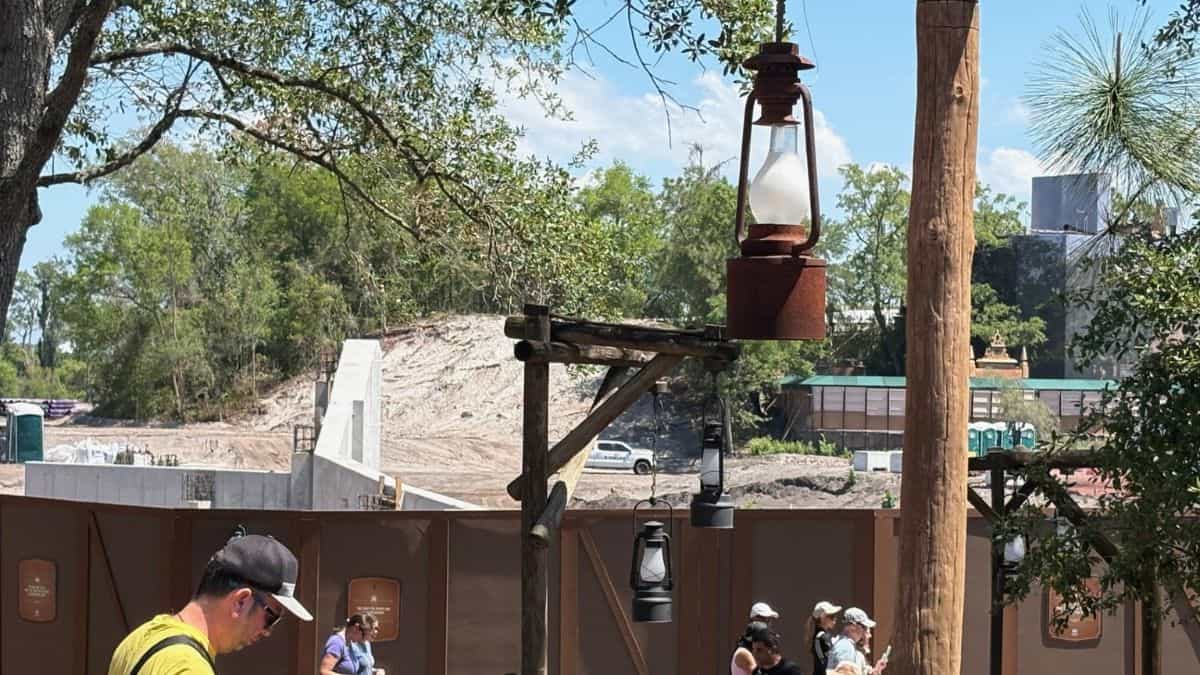
But as transport experts and frustrated vacationers point out on social media, this policy is a fundamentally flawed band-aid solution. Targeting locals does absolutely nothing to fix Disney World’s true underlying emergency—a severely outdated, overstressed infrastructure system currently trapped in a historic bottleneck. Banning people from select buses won’t help ease a crisis driven by heavy bulldozers and concrete walls, not local passengers.
The “Parking Hack” Scapegoat
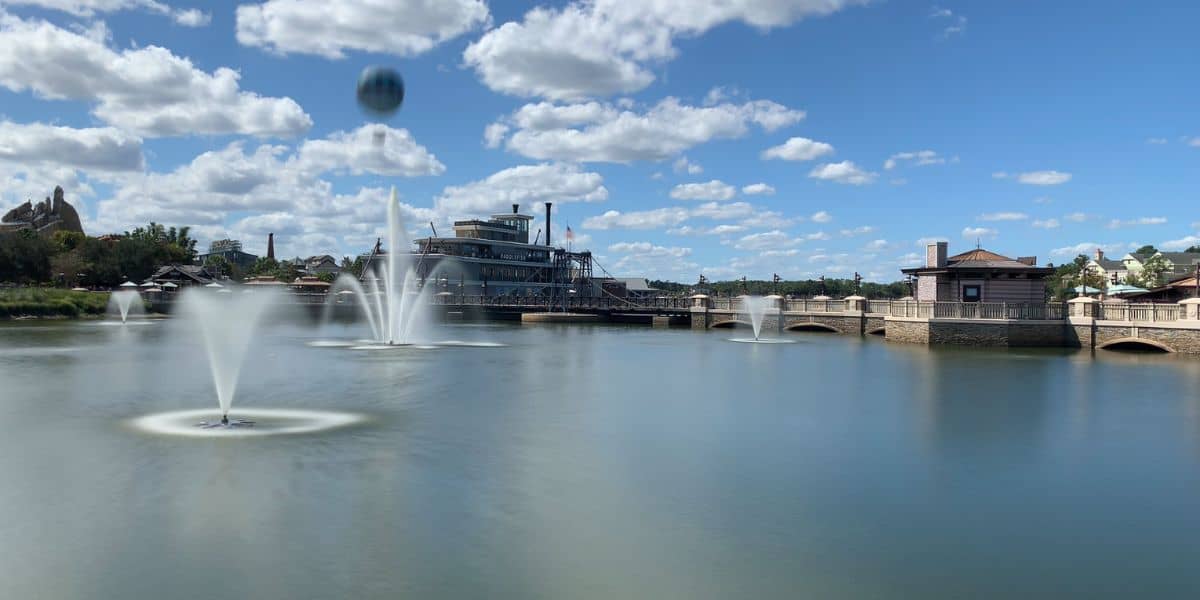
The knee-jerk reaction to implement strict checkpoints at Disney Springs stems from a desire to eliminate the infamous “free parking hack.” For years, offsite visitors, budget travelers, and locals would park at Disney Springs for free, hop on a resort-bound bus, and then transfer to a theme park to completely bypass the standard $35 daily parking fee.
While closing this loophole certainly protects Disney’s parking revenue, blaming this demographic for the broader transportation gridlock completely miscalculates how people move across the property.
Locals and day-trippers are rarely the ones clogging the primary resort-to-park bus loops during morning and evening rush hours. The vast majority of local annual passholders already receive complimentary theme park parking as part of their pass tiers.

By enforcing this new mandate, Disney isn’t freeing up massive amounts of logistically critical space. Instead, they are simply forcing casual day guests back into their cars, thereby increasing traffic congestion on surrounding roadways, overloading parking toll plazas, and worsening gridlock at theme park drop-off zones. It shifts the bottleneck from the bus turnstiles straight to the asphalt.
The Real Problem: An Infrastructure in a Stranglehold
The true catalyst for the current transit crisis isn’t who is riding the buses, but where the buses are forced to drive. Walt Disney World is currently undergoing one of the most aggressive, disruptive periods of physical transformation in its history.
While these massive expansions promise an exciting future for the vacation kingdom, the immediate consequence is an unprecedented spatial crunch. Disney’s internal infrastructure—its roads, walkways, security checkpoints, and bus bays—was never designed to handle peak modern attendance while simultaneously surrendering massive land footprints to construction walls.
When construction crews block off a major artery or close a perimeter road, the entire transit system suffers a cascading delay. A single re-routed bus line alters the timing of the entire fleet, creating a domino effect that results in ninety-minute wait times at the resort hubs.
The Three-Park Construction Crunch
To understand the sheer strain on the infrastructure, one needs only look at the current map of the property. The resort is simultaneously executing multi-year mega-projects across three of its theme parks and a vast majority of its core resort hotels, placing an unprecedented burden on the remaining space.
| Location | Major 2026 Construction Impact | Direct Effect on Infrastructure & Transit |
|---|---|---|
| Magic Kingdom | “Beyond Big Thunder” frontier expansion, land clearing, and layout prep. | Heavy industrial vehicle traffic on perimeter roads; closure of northern bypass walkways; increased bottleneck at the central hub. |
| Disney’s Animal Kingdom | Total transformation of DinoLand U.S.A. into the new “Tropical Americas” land. | Massive construction walls restrict guest flow; the closure of major pathways forces pedestrian gridlock at the front of the park and bus plazas. |
| Disney’s Hollywood Studios | Construction prep for the newly announced Monsters, Inc. Land and Animation Courtyard overhaul. | Elimination of secondary overflow pathways; heavy crowding near the front entrance security lines and the Skyliner/Bus shared plaza. |
| Resort Hotels | Major room overhauls, tower additions, and reimagining projects at a majority of Deluxe and Moderate resorts. | Staging areas reclaiming guest parking lots; delivery trucks conflicting with standard bus lanes; restricted resort-to-resort internal navigation. |
When you subtract this much usable real estate from the equation, the remaining infrastructure is forced to absorb the excess capacity. Banning a local family from riding a bus from Disney Springs to a resort does nothing to alleviate the fact that a construction delivery convoy is currently slowing down World Drive to a crawl.
What is Being Done to Long-Term Fix the Problem
To give credit where it is due, Disney leadership is fully aware that the current configuration is unsustainable. Behind the scenes, a significant portion of the company’s historic $60 billion capital expenditure fund is being funneled directly into heavy civil engineering and transit expansion projects designed to ease this exact crisis eventually.
Here is what is currently underway across the property to structurally solve the gridlock:
- World Drive and Osceola Parkway Widening: Massive, multi-phased roadwork projects are actively adding dedicated, completely isolated bus lanes to the busiest traffic corridors. This will allow the Disney bus fleet to bypass standard guest traffic during peak park-exit hours entirely.
- Centralized Transit Hub Overhauls: Plans are being drafted to redesign the drop-off and security infrastructure at the park entrances, creating larger, high-capacity bus loops that can accommodate multi-car articulated buses without causing vehicular tailspins.
- The Next Generation of Alternative Transit: With the Skyliner operating at full capacity, Disney should be closely evaluating the feasibility of expanding automated, non-roadway transit systems to link the upcoming park expansions directly to the newer resort wings, permanently taking cars and buses off the pavement.
Fix the Foundation First
“You can change the rules of who gets to stand in line all you want, but if the road ahead is blocked by a bulldozer, the bus still isn’t moving.”
Restricting bus and boat access for local annual passholders and non-resort guests at Disney Springs is a classic example of treating a symptom rather than the disease. It creates an illusion of corporate action and provides a temporary, negligible relief to select resort routes. Still, it ultimately alienates a deeply loyal local consumer base while failing to address the macro-level problem.
Disney World does not have a “local passenger” problem; it has a capacity and geometric layout problem brought on by a massive, necessary, but highly disruptive construction boom. Until the walls come down, the new lands open, and the dedicated transit corridors are fully paved, the gridlock will remain an unavoidable reality of the vacation kingdom. No amount of passenger bans will change that.


We went for dinner at Port Orleans Riverside at Boatwrights we arrived by car. After dinner we took the boat to the French Quarter we had to wait for three boats before we were boarded. On the way back we needed to wait for two boats. There was not enough room on the boats for us to board.
Anyone that things that this isn’t a problem for the guest actually paying to stay at these resorts probably has experienced the problem.
I see Disney doing the exact same thing for the resort monorail system at TTC in the near future especially during busy weeks.
Di$ney should have bit the bullet years ago (although costly) and executed a plan to connect all Di$ney properties via the monorail. Yes it would have been expensive than, but in today and future dollars not so.
Yes the trains could be automated. And so many guest than we’re also hoping for monorail connectivity!
There’s a lot of cope in this article. The truth is that the only people really affected will be those trying to avoid paying for parking at the parks by parking for free at Disney Springs. People who then took up space on TWO different buses, making paying resort guests wait longer.
AP holders who get free parking won’t be affected by this change.
Just because there are other problems doesn’t mean that they are not the problem. Both things can be true.