


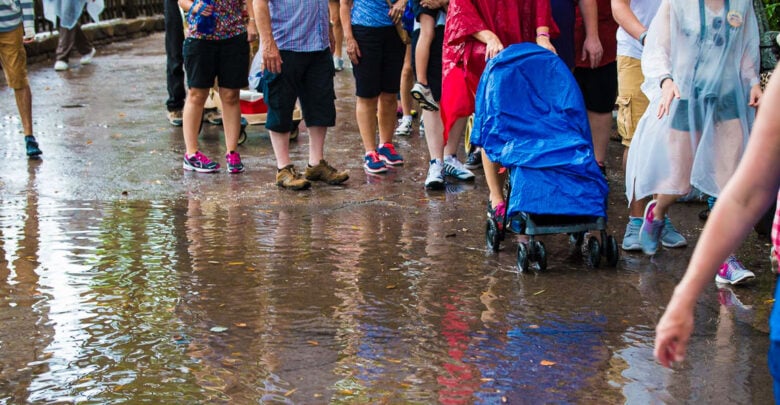
A potentially historic El Niño is strengthening ahead of winter 2026-27, and that could make Walt Disney World Resort vacations in Central Florida wetter, stormier, and more vulnerable to weather-related attraction interruptions. NOAA’s Climate Prediction Center said September 10 that there is a greater than 90% chance of a very strong El Niño during the Northern Hemisphere fall and winter, with a 75% chance the October-December period reaches a threshold that would exceed previous events in its record dating to 1950.
That does not mean Walt Disney World has announced winter closures, nor does it mean every vacation will be soaked. El Niño is a large-scale climate pattern, not a storm aimed at Orlando. But for families building expensive park days around outdoor headliners, the seasonal signal matters because Florida historically becomes wetter and stormier during El Niño winters.

A Very Strong El Niño Raises Florida’s Winter Weather Risk
The National Weather Service’s Florida El Niño guidance says El Niño winters tend to bring more stormy conditions to the Florida peninsula during winter and early spring. A stronger, more southerly jet stream can make rainfall more widespread, while very strong El Niño events have also been associated with a higher frequency of severe weather across the state.
NOAA cautions that these are probabilities, not promises. El Niño increases the chances of a wet, stormy winter across the southern United States, but it does not guarantee historically disruptive weather in Central Florida.
There is no confirmed forecast saying Walt Disney World will face continuous rain, repeated full-park shutdowns, or a specific number of lightning days. The climate pattern may simply create more opportunities for disruption during Florida’s dry season.

Disney World’s Outdoor Rides Could Feel the Disruption First
Rain alone does not automatically close Walt Disney World attractions. Disney’s own weather guidance for rainy park days says many indoor attractions continue operating during wet weather, while extreme downpours can delay outdoor attractions and lightning can shut them down temporarily.
That puts weather-exposed rides at the center of the winter vacation risk. Test Track at EPCOT includes its signature outdoor high-speed section; Slinky Dog Dash at Disney’s Hollywood Studios is outdoors; and Magic Kingdom’s Big Thunder Mountain Railroad and Seven Dwarfs Mine Train also expose riders and ride systems to outdoor conditions.
Inside the Magic has recently documented extended Test Track downtime at EPCOT and significant Slinky Dog Dash downtime, showing how losing a major ride can complicate touring plans. Big Thunder Mountain Railroad also returned to Magic Kingdom in May 2026 after its extensive refurbishment.
Weather adds another variable. A lightning threat can temporarily remove outdoor capacity while indoor attractions keep loading guests. But claims of “near-constant” closures or guaranteed multi-hour weather delays go beyond what current forecasts support.

Lightning Could Matter More Than Rain
For park guests, the practical difference between rain and thunderstorms is significant. Disney can operate much of the resort through ordinary rain. Lightning, strong winds, or more severe conditions create a different operational problem for outdoor rides, entertainment, transportation, and other exposed experiences.
National Weather Service research says very strong El Niño winters tend to produce increased storminess in Florida, with historical analysis finding more severe-weather events during very strong El Niño episodes.
Walt Disney World has dealt with weather disruption before. Heavy rain and thunderstorms have produced temporary attraction closures and flooding concerns, while colder winter weather has affected water-park operations. Inside the Magic has previously documented severe-weather impacts on Disney World attractions and winter weather affecting Disney water-park operations. Those events do not predict 2026-27, but they show how weather can reshape a park day.

A Shutdown at One Headliner Can Reshape an Entire Park Day
The biggest guest consequence may not be a resort-wide closure. It may be the domino effect caused when several outdoor experiences become temporarily unavailable at once.
A family arriving with Lightning Lane plans centered on Slinky Dog Dash, Test Track, Seven Dwarfs Mine Train, or Big Thunder Mountain Railroad may need to reorganize quickly when storms approach. Disney notes that attractions and entertainment are subject to closure or change, and its official Walt Disney World weather page says some resort experiences can be delayed, rescheduled, or canceled because of severe weather.
That makes flexibility more important this winter. Guests can monitor attraction status in My Disney Experience, prioritize weather-sensitive rides during favorable conditions, and keep indoor alternatives available instead of depending entirely on outdoor attractions.
Lightning Lane can help structure a day, but weather remains outside anyone’s control.

What Disney World Guests Should Watch This Winter
The strongest verified development right now is the El Niño itself. NOAA’s September ENSO outlook says the event is strengthening and has a greater than 90% chance of becoming very strong during fall and winter 2026-27. The agency’s seasonal discussion also says impacts consistent with El Niño become more likely as the event strengthens, while stressing they are not guaranteed.
For Walt Disney World guests, that is a planning signal—not a prediction that their vacation will be ruined. No winter-long Disney operational changes tied to El Niño have been announced, and forecasts for specific vacation dates will become far more useful as those dates approach.
Families traveling from late fall into early spring should watch NOAA and National Weather Service forecasts alongside Walt Disney World’s official weather updates and My Disney Experience. If this El Niño produces the wetter, stormier Florida pattern seen in past strong events, the biggest theme-park story may unfold attraction by attraction, storm by storm, rather than through a single dramatic resort shutdown.