

What comes to mind when you hear “Disney adult“?
For some people, warmth. A community. Friends who get why you drove four hours for a magnet.
For others, it is an insult, and it is intended as one.
I am in the first camp, mostly because I am one. Three park visits a month, minimum. Always hunting a new snack. Still tearing up at shows I have seen dozens of times. I wanted to work in Disney entertainment and I did, so meeting characters and standing in the back of a theater hits differently for me than it might for you.
Never felt like something I had to justify.
That changed recently, and it went somewhere ugly.

Where It Started
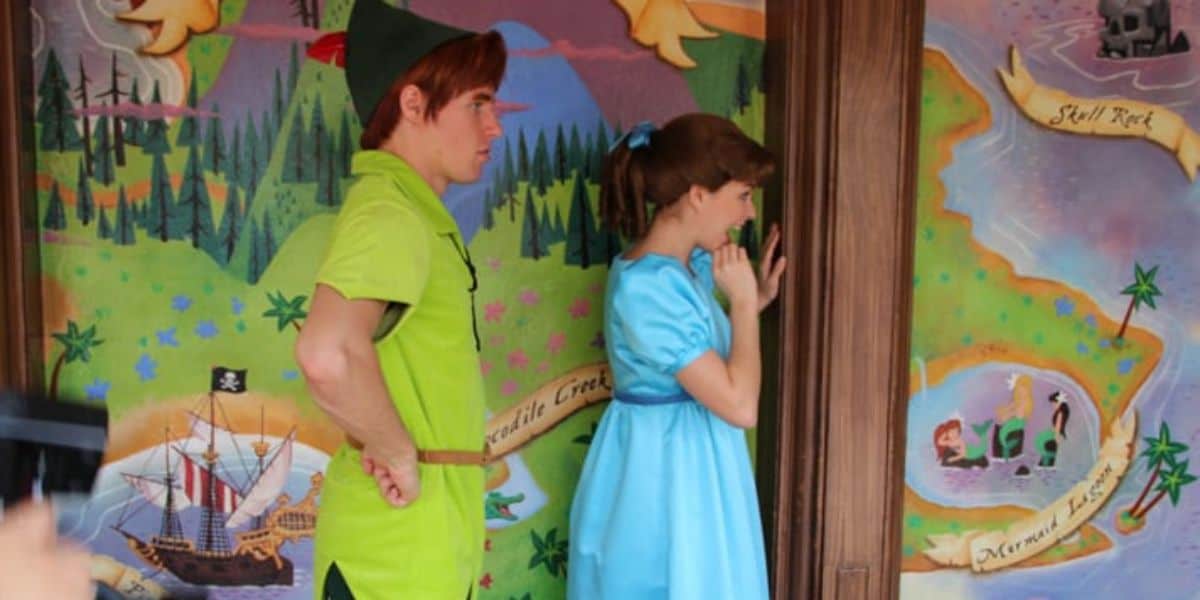
The Peter Pan situation at Disneyland.
That story raised real questions about character performer safety. Those questions deserved asking, and we covered them.
What came after was something else. The conversation stopped being about one guest and became about all of us, with “Disney adult” recast as shorthand for mentally ill, unstable, arrested.
One creator posted repeatedly about how mentally unstable Disney adults supposedly are. Fans pushed back. She doubled down. Then she deleted everything and posted a closing statement.
“Due to threats and harassment from self-identified ‘Disney Adults,’ I’ve taken down all my posts regarding Disney Adults,” she wrote. “Unfortunately, the response from ‘Disney Adults’ has provided a fairly compelling closing argument for my original position. You guys are legit terrifying.”
Let me be direct. Harassment is never the answer. Anyone sending threats made this worse and handed the argument away.
But a community defending itself is not the same as a community proving a stereotype, and counting every angry reply as evidence is its own dishonesty.
Why the Mental Illness Part Matters
This is the piece I cannot drop.
I live with anxiety, ADHD, and a physical disability. Saying Disney adults are mentally ill uses mental illness as an insult. It makes a diagnosis a punchline.
That reaches way past this fandom. It tells people a condition is shameful, and it hits hardest on the people here already carrying something, visible or not.
I have written about DAS and how the current system fails disabled guests. About people being told to just stay home. That rhetoric and this rhetoric share an address.
One commenter laid out the cost.
“I had someone close in my life for a very long time who would belittle me for my love of Disney/Parks/Music, and it did a number on me being able to actually enjoy ANYTHING since cutting ties with them,” wrote Threads user that_alternative_princess. “I still feel gross for having fun hobbies. Even concerts feel like a waste of time.”
That is the damage. Not to a corporation. To people.
The Term Is Not a Diagnosis
Disney adult means an adult who likes Disney. That is it.
Plenty of us grew up here and it stuck, the way anything from childhood does when it keeps showing up. Others found it later. Some save all year for one trip. Some are locals with passes.
One commenter noted roughly 37% of families visiting Disney have small children. The idea that adults without kids are trespassing does not survive a look at who is actually in the parks.
Yes, Some People Are Insufferable
The honest version of this admits a small slice of any fandom behaves badly.
A former cast member of two decades said it well.
“Most of them are chill. They toe the line of intense fandom without officially raising any red flags,” wrote user tommy_tom_and_the_funky_bunch. “But there’s that tiny percentage who ruins it for everyone else.”
Another applied it broadly. “A majority of fans are cool folks who just want to enjoy a thing. And then there’s the teeny tiny fraction who are incredibly loud, tedious jackasses.”
Fair. Some people here are rude to cast members, entitled about accommodations, or hostile toward children in a place built for them.
Call those people out. Individually. Not as a category.
As one user put it, “The people who shame adults who like Disney are the kind who would bully an adult for liking My Little Pony, Minecraft, Pokemon, etc.”

What Actually Showed Up in the Replies
Not what critics expected.
“As someone who struggles with depression and anxiety, I use the parks as a distraction to help with my mental health,” wrote user madisonminesinger.
“I get to go to the parks once a year. Forgive me if I’m a bit excited to enjoy a rare luxury,” wrote user austintaneously.
Another described behavior nobody gives this group credit for. “I let kids go in front of me, and let tourists do their thing and help where i can.”
And one summed the whole thing up. “Let people live their lives as long as they’re not disruptive, disrespectful, or causing harm to others. You don’t know these people, you don’t know their history, and they don’t impact your life in the slightest.”
So Answer This
How does someone else being a Disney adult harm you?
If it does not, the criticism is not about behavior. It is discomfort with other people’s joy, and that is not grounds for diagnosing strangers online.
Fandom can be a genuinely good thing. Community. Shared language. People who understand why a parade makes you cry.
Loving Disney as an adult is not a symptom. It is a hobby, and millions of us are not bothering anyone.


